

Why Skills Transfer Matters for Every Qualified Tradesman
Becoming a qualified tradesman is a major milestone. Years of training, practical work, and passing a trade test prove that you have the technical foundation to perform your job. But in industries like mining, engineering, and heavy industry, qualification is only the beginning. The real growth happens after qualification — through skills transfer. Many artisans make the mistake of thinking that once they are qualified, the learning phase is complete. In reality, the most valuable knowledge is often gained on the job, working alongside experienced senior artisans who have spent decades mastering their craft.
For many artisans who feel like their careers have stalled or that they are not progressing as quickly as they expected, the difference often comes down to continued learning after qualification. The trade certificate gives you the foundation, but the artisans who move into senior roles, specialist positions, or leadership opportunities are usually the ones who keep absorbing knowledge from the people around them. They ask questions, take interest in complex jobs, and pay attention to how experienced artisans diagnose problems, plan repairs, and manage difficult situations on site.
Skills transfer is where theory becomes real expertise. It’s where you learn the small details that are not written in manuals — the practical judgement, efficiency, and problem-solving ability that only comes from years in the field. When younger artisans take the opportunity to learn from those with more experience, they accelerate their own development and position themselves for greater responsibility in the future.
In other words, qualification proves you can do the job — but continuous learning is what moves your career forward.

Qualification Opens the Door — Experience Builds Mastery
A trade certificate confirms that you understand the principles of your trade. You know the correct procedures, safety standards, and technical fundamentals. However, real-world environments rarely follow textbook scenarios. Equipment behaves differently under pressure. Breakdowns happen in unexpected ways. Production deadlines add urgency. And every mine, plant, or workshop has its own systems and challenges.
This is where skills transfer becomes critical.
Working alongside a senior artisan allows younger tradesmen to learn things that cannot be taught in a classroom, including:
- Advanced troubleshooting techniques
- Efficient ways to diagnose faults
- Safe shortcuts developed through years of experience
- Practical problem-solving under pressure
- Work planning and decision-making in real operations
These are the skills that transform a qualified artisan into a highly valuable one.
The Senior Artisan: Your Greatest Learning Resource
Senior artisans are more than supervisors — they are walking libraries of industry knowledge. Many have 10, 20, or even 30 years of experience working with complex equipment, breakdown situations, and operational challenges. The knowledge they carry often comes from mistakes, lessons learned, and practical innovation developed over many years.
For a newly qualified tradesman, this is an incredible opportunity. The key is simple: be a sponge - absorb all the knowledge and wisdom that you can.
Observe how experienced artisans approach problems. Ask questions. Pay attention to the small details — how they listen to a machine, how they interpret vibration, how they identify faults before they become major failures. These are the subtle skills that separate an average artisan from an exceptional one.
Skills Transfer Happens Through Attitude
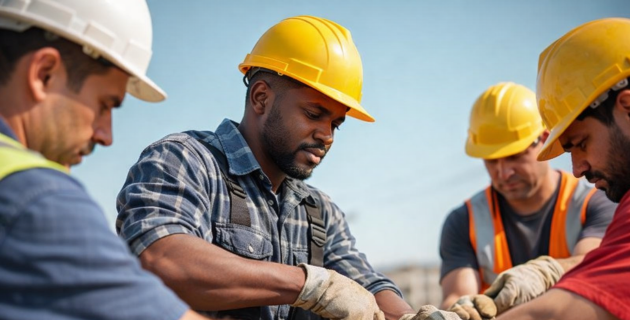
Not every tradesman fully benefits from skills transfer, and the difference often comes down to attitude. The artisans who grow the fastest are typically those who show genuine curiosity and a desire to understand not just how something works, but why it works that way. They have respect for experience and recognise that senior artisans carry valuable knowledge built over many years in the field. These tradesmen show initiative by stepping forward to assist with difficult tasks and breakdowns, knowing that challenging situations are often the best learning opportunities.
They are also highly observant, paying close attention to how experienced tradesmen approach problem-solving, fault finding, and repairs. Above all, they maintain a mindset of continuous learning, never assuming that they know everything and always remaining open to new knowledge. In many cases, senior artisans are far more willing to share their expertise with those who demonstrate a genuine interest in learning and improving their craft.
The Long-Term Benefits of Skills Transfer
Tradesmen who actively seek skills transfer often advance faster in their careers. Over time, the knowledge gained from experienced mentors leads to:
- Faster fault finding and problem solving
- Greater technical confidence
- Stronger reputation within teams
- Leadership opportunities such as Foreman or Supervisor roles
- Opportunities for international or expat work
The global demand for skilled artisans continues to grow, particularly in sectors like mining, engineering, and heavy manufacturing. The tradesmen who stand out are those who combine formal qualifications with deep practical knowledge.
Learning Never Stops in the Trades
The best artisans understand that their career is a continuous learning journey.
Technology evolves. Equipment improves. New systems and automation are introduced. Every new site, machine, or project brings fresh challenges. Those who stay curious and open to learning will continue to grow long after they qualify. Passing your trade test makes you a qualified tradesman. Skills transfer is what turns you into a master of your trade. Work closely with experienced artisans. Ask questions. Observe everything. Learn from every breakdown, repair, and installation. Because the knowledge you absorb today will shape the artisan you become tomorrow.
 Chat to Us
